



Albumin Injection
Albumin injection is a sterile intravenous preparation containing human albumin, an important plasma protein naturally present in the bloodstream. Human albumin plays a major role in maintaining plasma oncotic pressure and transporting several substances throughout the body.
In clinical settings, human albumin injection may be used when expansion or maintenance of circulating plasma volume is medically required. It is administered intravenously under the supervision of qualified healthcare professionals.
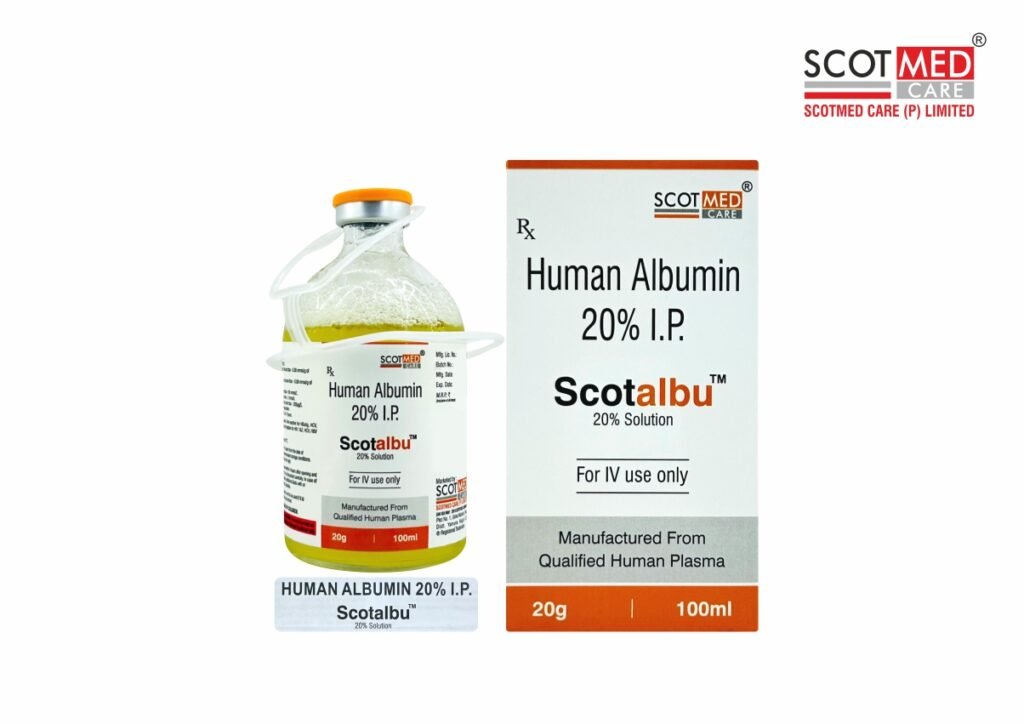
Human Albumin 20% preparations are concentrated albumin solutions commonly supplied for hospital and institutional use. The product shown here contains Human Albumin 20% I.P., equivalent to 20 g in 100 ml, and is intended for IV use only.
What Is Human Albumin?
Albumin is the most abundant protein found in human plasma. It is synthesized by the liver and performs several essential physiological functions.
Its principal roles include maintaining oncotic pressure within blood vessels, supporting normal distribution of body fluids, and acting as a carrier protein for hormones, fatty acids, medicines, bilirubin and other substances.
When albumin levels or circulating blood volume are significantly reduced in certain clinical situations, doctors may consider albumin injection based on the patient’s individual condition.
Albumin Injection Composition
A common concentrated preparation is:
Concentration: 20% solution
Albumin Content: 20 g
Volume: 100 ml
Route: Intravenous use only
The exact formulation, excipients and administration instructions can vary between products. Healthcare professionals should always refer to the approved product information before use.
Albumin Injection Uses
Albumin injection uses depend on the clinical condition, patient status and treatment protocol. Human albumin may be considered by physicians in situations involving reduced circulating blood volume or significant disturbances in albumin and fluid balance.
Clinical situations where albumin preparations may be used include management of hypovolemia, selected cases of severe hypoalbuminemia, certain complications associated with liver disease, plasma-volume support in specific hospital settings, and other situations where a physician determines that intravenous albumin replacement is appropriate.
Albumin therapy should not be selected only on the basis of a laboratory albumin value. The complete clinical condition of the patient must be evaluated.
Human Albumin Injection in Hospital Care
Human albumin injection is predominantly used in hospitals, intensive-care environments and other supervised healthcare settings.
Because albumin directly affects intravascular volume and fluid distribution, administration generally requires clinical assessment and monitoring. Depending on the patient’s condition, healthcare professionals may monitor blood pressure, pulse, urine output, electrolytes and indicators of circulatory status.
The dosage and infusion rate must be determined by a qualified medical professional.
How Albumin Injection Works
Albumin contributes substantially to the oncotic pressure that helps retain fluid within blood vessels.
When intravenous albumin is administered, it increases the albumin concentration within the circulation and can help draw fluid into the intravascular compartment. This effect is one reason albumin preparations are used in selected conditions requiring plasma-volume support.
The physiological response varies according to the patient’s hydration status, underlying illness and vascular permeability.
Albumin 20% Injection
Albumin 20% injection is a concentrated human albumin preparation. Compared with less concentrated albumin solutions, a 20% formulation delivers a relatively high amount of albumin in a smaller fluid volume.
For example:
100 ml of Human Albumin 20% solution contains approximately 20 g of albumin.
Its concentrated nature means careful clinical assessment and monitoring are important during administration.
Human Albumin 20% Injection
Human albumin 20% injection is generally manufactured from qualified human plasma using controlled plasma fractionation and purification processes.
Pharmaceutical manufacturing of human plasma-derived products involves extensive quality-control procedures intended to maintain product consistency and safety. Manufacturers must follow applicable regulatory and quality requirements for collection, processing, purification, testing, filling and release.
Albumin Injection Administration
Albumin preparations are intended for intravenous administration.
The dose, concentration, dilution requirements and rate of infusion should be determined according to the patient’s clinical requirements and the approved prescribing information.
Albumin injection should be administered only by trained healthcare professionals. Patients requiring albumin therapy may need continuous or periodic monitoring during treatment.
Important Precautions
Albumin infusion requires medical supervision because rapid or inappropriate administration may contribute to circulatory overload in susceptible patients.
Particular care may be required in people with conditions where increased blood volume could present additional risks.
Treatment should be reassessed if signs of circulatory overload or other significant reactions develop.
The product should not be used if the container is damaged or if the solution does not meet the appearance requirements described in its approved product information.
Albumin Injection Side Effects
Like other intravenous biological products, albumin injection can cause adverse reactions in some patients.
Possible reactions can include flushing, fever, chills, nausea, skin reactions or changes in cardiovascular status. Serious hypersensitivity reactions are uncommon but require immediate medical attention.
This information is educational and is not a substitute for the approved prescribing information or professional medical advice.
Storage of Albumin Injection
Correct storage is important for maintaining pharmaceutical product quality.
Human albumin preparations should be stored according to the temperature and handling conditions mentioned on the manufacturer’s approved label.
Healthcare institutions and distributors should also maintain appropriate storage conditions throughout transportation and warehousing.
Do not use a product after its stated expiry date or when packaging integrity has been compromised.
Albumin Injection for Institutional and Hospital Supply
Albumin products are primarily supplied through regulated healthcare and institutional channels.
Typical B2B requirements may include supply to:
Hospitals, nursing homes, healthcare institutions, pharmaceutical distributors, licensed wholesalers and authorized healthcare procurement organizations.
Product availability, packaging and commercial supply conditions may vary according to regulatory requirements and stock status.
Human Albumin 20% I.P. – Product Information
The product displayed is a Human Albumin 20% I.P. intravenous solution.
Generic Name: Human Albumin 20% I.P.
Brand Name: Scotalbu
Strength: 20% Solution
Albumin Content: 20 g
Pack Size: 100 ml
Route: For IV use only
Source: Manufactured from qualified human plasma
This concentrated albumin preparation is intended for professional healthcare use according to the prescribing physician’s clinical judgment.
Why Albumin Injection Requires Professional Supervision
Albumin therapy is different from routine oral medicines because it directly alters circulating plasma volume and intravascular oncotic pressure.
The physician must consider factors such as the patient’s cardiovascular status, fluid balance, underlying medical condition and treatment objectives before determining whether albumin therapy is appropriate.
For this reason, albumin injection should not be self-administered or used without medical supervision.
Frequently Asked Questions About Albumin Injection
What is albumin injection?
Albumin injection is an intravenous preparation containing purified human albumin, a major plasma protein involved in maintaining intravascular oncotic pressure and transporting substances through the bloodstream.
What is albumin injection used for?
Doctors may use albumin preparations in selected clinical situations requiring plasma-volume support or albumin replacement. The indication depends on the patient’s complete clinical condition.
What is Human Albumin 20%?
Human Albumin 20% is a concentrated albumin solution containing approximately 20 g of albumin per 100 ml.
Is albumin injection administered intravenously?
Yes. Human albumin preparations are intended for intravenous administration under medical supervision.
Can albumin injection be used without a doctor’s advice?
No. Albumin is a prescription-based intravenous treatment and should only be administered according to a qualified healthcare professional’s instructions.
What is the difference between albumin injection and albumin infusion?
The terms albumin injection and albumin infusion are often used in searches to describe intravenous human albumin preparations. In practice, the product is generally administered through controlled intravenous infusion according to the prescribed treatment protocol.
Conclusion
Albumin injection is an important plasma-derived intravenous product used in selected hospital and clinical situations requiring albumin replacement or plasma-volume support.
Human Albumin 20% provides a concentrated albumin solution, with 20 g of albumin in 100 ml, and should be administered exclusively by trained healthcare professionals.
Appropriate patient assessment, dosage selection, infusion rate, monitoring, storage and handling are essential parts of responsible albumin therapy.