



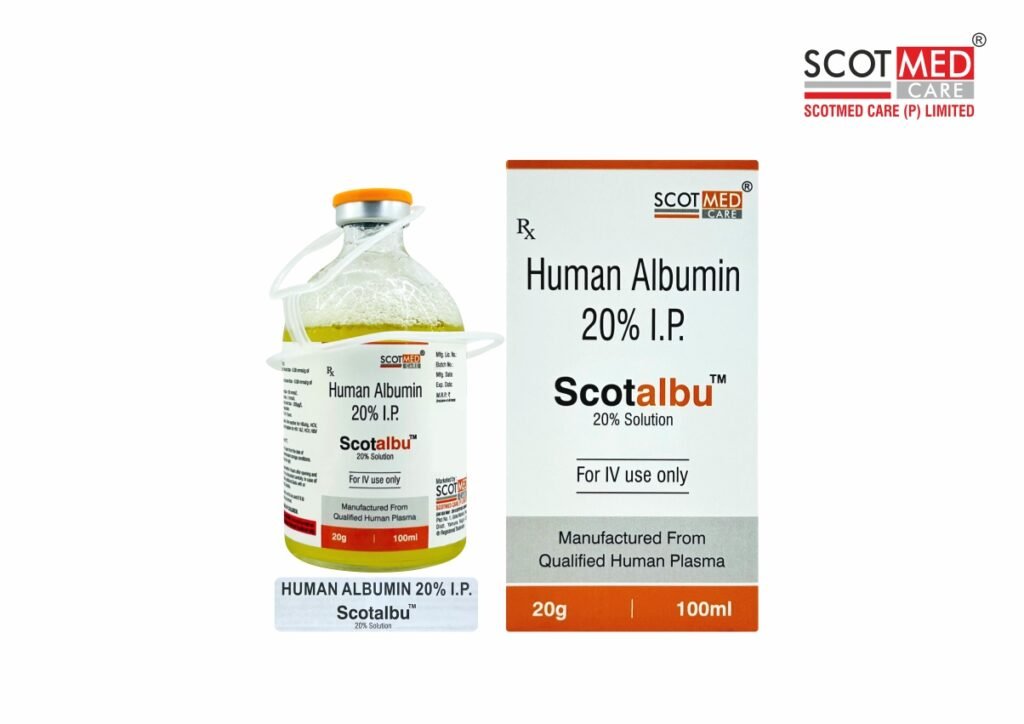
Human Albumin Injection
Human albumin injection is a plasma-derived medicinal preparation containing albumin, one of the most important proteins naturally present in human blood. It is primarily used in hospitals and critical-care settings when restoration or maintenance of circulating blood volume and plasma albumin levels is clinically required.
Human albumin plays an essential role in maintaining oncotic pressure, transporting various substances in the bloodstream, and supporting normal fluid distribution between blood vessels and body tissues. Depending on the concentration and clinical indication, albumin preparations may be administered intravenously under the supervision of qualified healthcare professionals.
Products such as Human Albumin 20% I.P. are concentrated albumin solutions intended for intravenous use and should only be administered according to a physician’s assessment, dosage recommendation, and monitoring requirements.
What Is Human Albumin Injection?
Human albumin injection is a sterile intravenous preparation containing purified human albumin obtained from qualified human plasma. Albumin is the most abundant protein found in blood plasma and contributes significantly to maintaining fluid balance within the circulatory system.
A concentrated formulation such as

contains a higher proportion of albumin compared with lower-concentration preparations. Because of its ability to increase plasma oncotic pressure, it may be selected by clinicians in specific situations involving reduced circulating volume or low albumin levels.
The exact indication, dose, infusion rate, and duration depend on the patient’s medical condition and clinical response.
How Does Human Albumin Injection Work?
Albumin helps retain fluid within blood vessels by contributing to colloid osmotic or oncotic pressure. When albumin concentration in the bloodstream is significantly reduced, fluid can move from the vascular space into surrounding tissues.
Administration of human albumin injection can help increase plasma albumin concentration and support intravascular fluid volume when clinically appropriate.
Albumin also acts as a transport protein for several naturally occurring substances, including hormones, fatty acids, bilirubin, and certain medicines.
Human Albumin Injection Uses
Human albumin injection may be used in a number of hospital-based clinical situations. Treatment decisions should always be made by an experienced medical professional based on the patient’s diagnosis, laboratory findings, circulation status, and overall condition.
Common clinical situations in which albumin therapy may be considered include:
- Hypovolemia: Albumin may be used as a plasma-volume expander when restoration of circulating blood volume is medically necessary.
- Hypoalbuminemia: Patients with significantly reduced serum albumin may require treatment depending on the underlying cause and clinical symptoms.
- Certain liver-related complications: Albumin may be used in selected patients with advanced liver disease or related circulatory complications according to established treatment protocols.
- Large-volume paracentesis: Clinicians may administer albumin in selected patients after removal of a large quantity of ascitic fluid.
- Critical-care situations: Albumin can sometimes form part of fluid-management strategies in carefully selected hospitalized patients.
- Selected surgical or intensive-care conditions: Doctors may consider albumin when colloid volume expansion is clinically appropriate.
Human albumin injection is not suitable for routine self-medication and should not be administered without appropriate medical evaluation.
Human Albumin 20% Injection
Human Albumin 20% injection is a concentrated albumin formulation commonly supplied for intravenous administration.
A 20% solution has significant oncotic activity and therefore requires careful assessment of the patient’s cardiovascular and hydration status before and during infusion.
Healthcare professionals typically monitor factors such as:
blood pressure, heart rate, urine output, electrolyte balance, haemoglobin or haematocrit, and signs of circulatory overload.
The infusion rate and quantity required vary depending on the indication and individual clinical response.
Human Albumin Infusion
The terms human albumin injection and human albumin infusion are often used when referring to intravenous albumin therapy.
Albumin should generally be administered through the intravenous route using appropriate sterile procedures. The medicine should be inspected before use, and healthcare professionals should follow the approved prescribing information and institutional protocols.
The rate of albumin infusion may need adjustment according to the patient’s condition, particularly in elderly patients or individuals with cardiovascular, renal, or pulmonary concerns.
Why Is Albumin Important in the Human Body?
Albumin performs several important physiological functions.
One of its major roles is maintaining plasma oncotic pressure, helping keep fluid inside blood vessels instead of allowing excessive movement into body tissues.
Albumin also acts as a carrier protein for various substances circulating in the bloodstream. These include certain hormones, drugs, fatty acids and metabolic compounds.
Low albumin levels can occur for multiple reasons, including impaired production, increased protein loss, severe illness, inflammation or other underlying medical conditions. However, a low laboratory albumin value alone does not automatically mean albumin infusion is required.
Treatment depends on the complete clinical picture.
Human Albumin Injection in Critical Care
Fluid management is an important component of critical-care medicine. Patients in intensive-care units may experience major changes in circulation, vascular permeability and plasma protein concentration.
In appropriately selected cases, doctors may consider human albumin injection as part of a wider treatment strategy.
However, the choice between albumin, crystalloid fluids and other therapies depends on factors such as the underlying illness, haemodynamic status, kidney function, cardiovascular condition and response to initial treatment.
Therefore, albumin therapy should be individualized rather than used routinely for every critically ill patient.
Human Albumin Injection Administration
Human albumin injection is intended for intravenous administration only.
Before administration, healthcare professionals should confirm the correct product concentration, patient requirement, prescribed dose and infusion rate.
During treatment, patients may require monitoring for changes in blood pressure, circulation and fluid balance.
Rapid or excessive administration may increase the risk of circulatory overload in susceptible individuals. For this reason, dosing and infusion rates should always follow professional medical guidance and the approved product information.
Possible Side Effects of Human Albumin Injection
Like other medicinal products, human albumin injection may cause adverse reactions in some patients.
Possible reactions can include:
fever, chills, nausea, flushing, headache, changes in blood pressure, rapid heartbeat or hypersensitivity reactions.
Serious allergic reactions are uncommon but require immediate medical attention if they occur.
Patients should be closely observed during administration, particularly when albumin is being given for the first time or when large quantities are required.
Precautions During Human Albumin Infusion
Human albumin should be administered carefully in patients where an increase in circulating blood volume could create additional risk.
Special monitoring may be necessary in individuals with certain cardiovascular, renal or pulmonary conditions.
Albumin concentration and electrolyte composition can also vary between formulations, so clinicians must select the appropriate preparation based on individual requirements.
The treating physician should evaluate the patient’s overall fluid and electrolyte status throughout therapy.
Human Albumin 20% I.P. 100 ml
Human Albumin 20% I.P. preparations may be available in 100 ml infusion bottles, depending on the marketed product.
For example, the product shown is:
Generic Name: Human Albumin 20% I.P.
Brand Name: Scotalbu
Concentration: 20% Solution
Pack Size: 100 ml
Albumin Content: 20 g
Route: For IV use only
Company: Scotmed Care (P) Limited
Product availability, packaging and specifications should always be confirmed from the current product label and authorized supplier information.
Storage and Handling
Human albumin injection should be stored according to the conditions printed on the approved product packaging.
Healthcare professionals should inspect the solution before administration. It should not be used if the container is damaged or if the solution appears abnormal compared with the manufacturer’s specifications.
Once opened, the product should be handled according to the approved prescribing and institutional guidelines.
Human Albumin Injection for Hospitals and Institutional Supply
Human albumin is predominantly used in hospitals, intensive-care departments, emergency-care facilities and other specialized healthcare environments.
Healthcare institutions purchasing human albumin injection should source it through authorized pharmaceutical supply channels and ensure appropriate cold-chain or storage requirements whenever specified by the manufacturer.
Scotmed Care provides pharmaceutical products for professional and institutional requirements, subject to product availability, applicable regulatory requirements and documentation.
Frequently Asked Questions About Human Albumin Injection
What is human albumin injection used for?
Human albumin injection may be used for plasma-volume support and selected conditions involving reduced albumin or altered circulatory volume. Its use depends on the patient’s clinical condition and must be determined by a doctor.
Is human albumin injection given intravenously?
Yes. Human albumin products intended for infusion are generally administered intravenously under medical supervision.
What is human albumin 20% injection?
Human albumin 20% injection is a concentrated albumin solution containing approximately 20 g of albumin per 100 ml of solution, depending on the approved formulation.
Can human albumin injection be taken at home?
It is a prescription hospital-use medicine and should be administered only under qualified medical supervision with appropriate patient monitoring.
Is human albumin injection the same as albumin infusion?
The terms are commonly used interchangeably when referring to intravenous administration of an albumin preparation.
Who decides the dose of human albumin injection?
The treating physician determines the dose based on the indication, body weight, circulatory status, laboratory findings and clinical response.
Conclusion
Human albumin injection is an important plasma-derived medicine used in selected hospital and critical-care situations where restoration of circulating volume or management of clinically significant albumin deficiency is required.
Concentrated formulations such as Human Albumin 20% I.P. require careful intravenous administration and appropriate monitoring because treatment needs vary significantly from one patient to another.
Human albumin therapy should therefore always be prescribed and administered by qualified healthcare professionals according to the approved product information and the patient’s individual clinical condition.