



Medical Uses, Benefits, Administration & Important Information
Albumin injection is a sterile intravenous solution containing human albumin, a major protein naturally present in blood plasma. In clinical practice, doctors may use albumin solutions when a patient requires expansion of circulating blood volume or correction of certain conditions associated with low albumin levels.
Understanding albumin injection uses is important because this is a prescription medicine intended for administration in hospitals or healthcare settings under medical supervision. The exact dose, concentration and duration of treatment depend on the patient’s clinical condition.
What Is Albumin Injection?
Human albumin injection is prepared from human plasma and is available in different concentrations, commonly including 20% albumin solution. Albumin contributes to maintaining oncotic pressure, which helps keep fluid within the blood vessels.
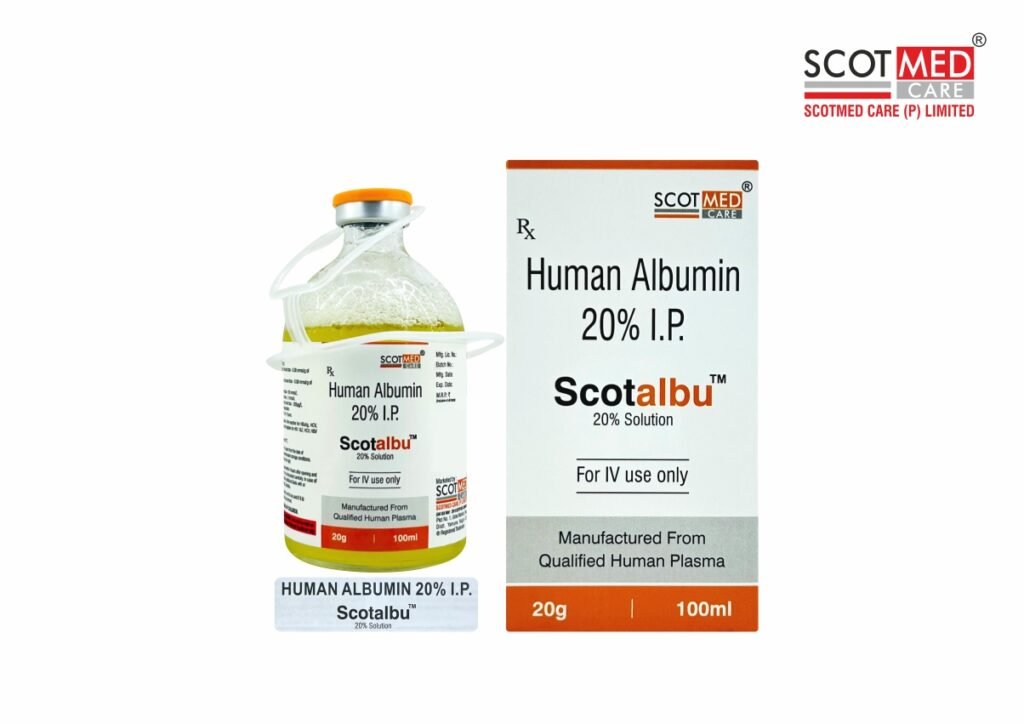
Products such as Human Albumin 20% I.P. 100 ml are intended for intravenous use only and should be administered according to a physician’s assessment and prescribing information.

Main Albumin Injection Uses
The principal albumin injection uses may include treatment or supportive management of conditions where restoration of circulating volume or albumin is medically indicated.
1. Hypovolemia
Albumin may be used as a plasma volume expander in selected patients with hypovolemia, a condition in which circulating blood volume is reduced.
A healthcare professional determines whether albumin or another intravenous fluid is appropriate based on blood pressure, fluid status and the underlying cause.
2. Hypoalbuminemia
Another important area among albumin injection uses is the management of clinically significant hypoalbuminemia, meaning an abnormally low concentration of albumin in the blood.
Low albumin can occur in association with serious illness, liver disease, kidney disorders, major surgery or other medical conditions. Albumin replacement is not automatically required for every low laboratory value; treatment depends on the patient’s overall clinical condition.
3. Use in Certain Liver-Related Conditions
Human albumin may be prescribed in selected complications of advanced liver disease. Depending on the clinical situation, physicians may use albumin in patients undergoing procedures such as large-volume paracentesis or in certain complications associated with cirrhosis.
The decision, dose and monitoring requirements should always be determined by the treating specialist.
4. Plasma Volume Support
Albumin solutions can help increase plasma oncotic pressure and circulating volume. For this reason, albumin may be considered when rapid intravascular volume expansion is clinically necessary and appropriate.
5. Support in Selected Critically Ill Patients
Albumin is sometimes used in intensive-care or hospital settings when a patient’s condition requires carefully managed fluid and plasma-volume support.
Its use depends on the underlying illness, response to other fluids, cardiovascular status and medical judgment.
6. Selected Surgical and Postoperative Situations
Albumin may be considered during or after certain major surgical procedures when blood-volume management or correction of significant albumin deficiency is necessary.
It is not routinely needed after every surgical procedure.
How Does Albumin Injection Work?
Albumin contributes significantly to the oncotic pressure of blood. When administered intravenously, concentrated albumin can draw fluid into the vascular compartment and help support circulating plasma volume.
This explains why many albumin injection uses relate to fluid balance, blood-volume management and conditions involving reduced plasma albumin.
Human Albumin 20% Injection
A Human Albumin 20% injection is a concentrated albumin solution administered intravenously. A 20% solution contains approximately 20 g of albumin per 100 ml.
Because concentrated albumin can alter circulating volume and fluid distribution, administration requires professional monitoring.
How Is Albumin Injection Administered?
Albumin injection is given intravenously by trained healthcare professionals. The infusion rate and total dose vary according to the patient’s condition.
Healthcare professionals may monitor factors including:
Blood pressure, pulse, urine output, electrolyte balance, hydration status and signs of circulatory overload.
Patients should not attempt to use or administer human albumin injections without medical supervision.
Possible Side Effects
Albumin solutions are generally used under close clinical monitoring. Possible adverse reactions can include nausea, fever, chills, flushing, headache or allergic reactions.
More serious reactions are uncommon but require immediate medical attention. Excessive or overly rapid administration can also contribute to circulatory overload in susceptible patients.
Important Precautions
Before prescribing albumin, doctors may consider the patient’s heart, kidney and circulatory status, as well as fluid balance and other medications.
Extra caution may be necessary in patients where an increase in circulating blood volume could create complications.
Is Albumin Injection Used Simply Because Albumin Levels Are Low?
Not necessarily. A low serum albumin result alone does not always mean that albumin infusion is required.
Doctors evaluate the cause of the low albumin level, symptoms, fluid status, underlying disease and expected benefits before deciding whether albumin therapy is appropriate.
Albumin Injection Uses – Frequently Asked Questions
What is albumin injection used for?
Albumin injection may be prescribed for selected patients requiring plasma-volume expansion or management of clinically significant albumin deficiency and certain liver-related or critical-care conditions.
What is Human Albumin 20% used for?
Human Albumin 20% is a concentrated intravenous albumin solution used in specific clinical situations where albumin replacement or intravascular volume support is medically indicated.
Can albumin injection be given at home?
Albumin is generally administered under professional medical supervision because the patient’s response, infusion rate and circulatory status may need monitoring.
How quickly does albumin work?
Its effects on intravascular volume can begin during or after administration, but the clinical response depends on the patient’s medical condition and the reason for treatment.
Is albumin injection a prescription medicine?
Yes. Human albumin is a prescription product intended for use according to a qualified healthcare professional’s instructions.
Conclusion
The major albumin injection uses involve carefully selected clinical situations requiring albumin replacement or plasma-volume support. Human Albumin 20% may be used in hospitals for conditions such as hypovolemia, significant hypoalbuminemia and certain complications associated with serious illness or liver disease.
Because albumin directly affects fluid distribution and circulating blood volume, it should be administered only under medical supervision. The appropriate indication, concentration, dose and infusion rate must be determined for each patient individually.
Medical Disclaimer: This information is intended for general educational purposes and is not a substitute for professional medical advice, diagnosis or treatment. Albumin injection is a prescription medicine and should be administered only under the supervision of a qualified healthcare professional.