



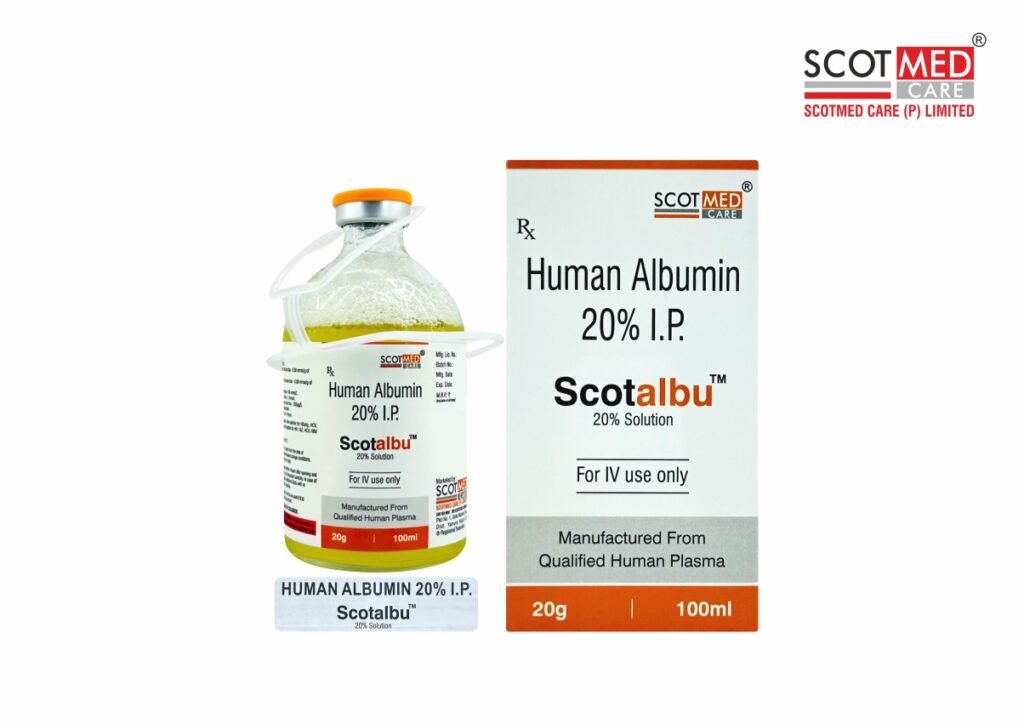
Inj Albumin
Uses, Benefits, Administration and Important Information
Inj albumin is a sterile intravenous preparation containing Human Albumin, a naturally occurring protein found in human plasma. Albumin plays an important role in maintaining oncotic pressure, circulating blood volume, and the transport of various substances within the bloodstream.
The product shown is Human Albumin 20% I.P., 20 g/100 ml, intended for IV use only. Inj albumin is a prescription medicine and should be administered only by trained healthcare professionals under medical supervision.
What Is Inj Albumin?
Inj albumin is a concentrated human albumin solution prepared from qualified human plasma. Albumin contributes significantly to maintaining the normal distribution of fluid between blood vessels and body tissues.
When circulating albumin levels or effective blood volume are reduced in certain clinical situations, doctors may prescribe intravenous human albumin based on the patient’s condition, laboratory findings, fluid status, and treatment requirements.
A 20% human albumin solution is a hyperoncotic albumin preparation. Because concentrated albumin can influence intravascular fluid movement, the dose and infusion rate need careful medical assessment.
Inj Albumin Uses
The exact use of inj albumin depends on the patient’s clinical condition. It may be considered by healthcare professionals in selected circumstances involving reduced circulating volume or albumin-related fluid-management needs.
Clinical situations in which human albumin preparations may be used can include:
- Selected cases of hypovolemia or plasma volume expansion
- Certain complications associated with advanced liver disease
- Specific situations involving low serum albumin
- Fluid-management requirements in selected hospital or critical-care settings
- Certain procedures where albumin replacement is considered clinically appropriate
Albumin should not be used simply because a laboratory report shows a low albumin value. The underlying cause and the patient’s overall condition need to be evaluated by a doctor.
How Does Inj Albumin Work?
Albumin is one of the major proteins in human blood plasma. One of its important functions is maintaining colloid oncotic pressure, which helps retain fluid within blood vessels.
After intravenous administration, inj albumin can increase circulating albumin and draw fluid toward the intravascular space. This is why careful monitoring is important, particularly in people who may be vulnerable to fluid overload or cardiovascular complications.
Albumin also naturally binds and transports several endogenous substances, including hormones, fatty acids, bilirubin and some medicines.
Inj Albumin 20% – Product Strength
The displayed preparation contains:
Human Albumin 20% I.P. 100 ml intravenous solution – information for inj albumin price and product details.
Generic Name: Human Albumin
Strength: 20% I.P.
Albumin Content: 20 g
Pack Volume: 100 ml
Route: Intravenous use only
Dosage Form: Albumin solution for IV administration
A 20% solution means that approximately 20 grams of albumin are present in 100 ml of solution.
How Is Inj Albumin Administered?
Inj albumin is administered intravenously. It should generally be given in a hospital or supervised healthcare environment.
The dose, infusion rate and duration are determined individually. Medical professionals may consider factors such as:
- Patient body weight
- Blood pressure
- Circulating volume
- Serum albumin level
- Liver and kidney function
- Cardiac status
- Electrolyte balance
- Clinical response to therapy
Patients should not attempt to administer human albumin without professional medical supervision.
Monitoring During Albumin Infusion
While receiving inj albumin, healthcare professionals may monitor blood pressure, pulse, urine output, respiratory status and other clinical parameters.
Monitoring is particularly important because concentrated albumin may rapidly expand the intravascular compartment in some patients. The infusion may need to be slowed or stopped if signs of circulatory overload or an adverse reaction occur.
Possible Side Effects of Inj Albumin
Human albumin preparations are generally administered under close supervision. Possible adverse effects can include:
- Flushing
- Fever or chills
- Nausea
- Headache
- Changes in blood pressure
- Increased heart rate
- Shortness of breath
- Allergic or hypersensitivity reactions
Severe reactions are uncommon but require immediate medical attention. Any unusual symptoms occurring during an albumin infusion should be reported to the healthcare team immediately.
Precautions Before Using Inj Albumin
Before prescribing inj albumin, the treating doctor should review the patient’s complete clinical condition.
Special caution may be required in patients with conditions where increased circulating volume could create complications, such as certain cardiac, renal or pulmonary disorders.
The treating physician should also consider the patient’s fluid and electrolyte status. Albumin therapy does not automatically replace the need to manage the underlying disease or other fluid and electrolyte abnormalities.
Inj Albumin in Hospital and Critical Care
Human albumin is primarily a hospital-use product. Depending on the indication, it may be used in intensive care, gastroenterology, hepatology, surgery and other specialist departments.
Because the clinical situations requiring albumin can vary considerably, there is no single standard dose suitable for every patient. Treatment should always be individualized according to medical assessment and relevant prescribing information.
Difference Between Albumin Injection and Albumin Infusion
People often search for terms such as inj albumin, albumin injection, human albumin injection, and albumin infusion.
In practice, human albumin is usually supplied as an intravenous solution that is administered through an IV infusion. The terms may therefore be used informally to refer to the same type of human albumin preparation, although the exact product strength and presentation should always be checked.
Frequently Asked Questions About Inj Albumin
What is inj albumin used for?
Inj albumin is an intravenous human albumin preparation used in selected clinical situations where albumin replacement or plasma-volume management is considered appropriate by a doctor.
Is inj albumin given through IV?
Yes. Human albumin preparations such as the product shown are intended for intravenous use only.
What does albumin 20% mean?
Albumin 20% means the solution contains approximately 20 g of human albumin per 100 ml.
Can inj albumin be taken at home?
It should only be administered according to a physician’s instructions by appropriately trained healthcare professionals. Hospital or supervised clinical administration is commonly required.
Is inj albumin the same as human albumin injection?
The search terms are commonly used to describe intravenous preparations containing human albumin. The concentration, pack size and exact formulation can vary between products.
Conclusion
Inj albumin is a concentrated intravenous human albumin preparation used in selected medical conditions requiring albumin replacement or intravascular volume support. A Human Albumin 20% I.P. 100 ml preparation contains 20 g of albumin and is intended for IV administration.
Because albumin can significantly affect circulating fluid volume, its indication, dosage and infusion rate should always be determined by a qualified healthcare professional. Patients and caregivers should rely on the treating doctor for advice specific to the patient’s condition.
Disclaimer: This article is for general educational and product-information purposes only. Inj albumin is a prescription medicine and must be used only under the supervision of a qualified healthcare professional.